Table 23 beckons . . .
“It’s a strange thing,” author Kate Bowler says, “to carry so much grief and . . . still make dinner.”
I slump over the kitchen counter, blindsided by clickbait headlines devised by others to stoke fear. They radiate hatred. Manipulation. I feel compassion unraveling.
How dare they?
Straightening, I redirect my emotions. Picture a curvy, seemingly armored, butternut squash. Armed with a knife that could be sharper, I decapitate, peel, halve, and scrape away stringy snarls of seeds and slime. A fitting soundtrack for processing hype-gripe-&-spin. Why merely vent when I can outargue, outmaneuver, the resistance?
Kitchen morphs to courtroom. Did I mention I am a lawyer’s daughter? A daughter of heaven, too.
And God eternally, thoroughly, absolutely treasures each person who disagrees with me. Love your enemies, the Prince of Peace says. Let them bring out the best in you.
I rest my knife. Unevenly peeled and ker-chunked, the hapless vegetable before me awaits judicious seasoning. Messy, yet it brims with sustenance and care. Someone raised it, watered, and witnessed its rooted goodness.
So, what am I wrongly assuming from sensationalized public accusations and skewered truth?
I have blind spots. Biases. In other words, dirty dishes to bus, another surface to disinfect. Someone, please text me “6 Tips for Granting a Fair Hearing.”
Meanwhile, I tip squash into an oiled pan. Add quartered red onion, walnuts, fresh parsley, a glug of EVOO, a sploosh of pure maple syrup. Sprinkle feta like manna. Ingredients this good are bound to turn out alright. Right?
Earlier today a friend shared her take on King David’s twenty-third psalm—specifically, the metaphorical table God prepares for us in the presence of our enemies.
A personal Table 23.
“Morning by morning,” she says, “I get to ask, ‘Who will I be serving today? Can I facilitate goodwill? Celebrate common ground? Ease hunger or soothe a festering grievance?’”
She trusts God will inspire her with timely questions and observations meant to unlock a guest’s truest self, so that when they break bread together—be it supper, coffee and conversation—even confrontation—something honest and generous changes hands.
This rings true.
Time to set the timer.
Long ago, on the uphill road to Jerusalem (where Jesus would face a host of enemies ranged against him), he dropped in on two sisters. Perhaps he was pale, drawn, in need of a meal. Perhaps he hungered for someone to hear his troubled thoughts.
Look closer . . .
Martha cooks for him . . . dutifully takes on the work.
Mary sits by him . . . beautifully takes in the Word.
Mary embodies a loving gaze, a listening heart. And Martha, ever at her ancient counter, shows me myself—wanting to help but caught by inner arguments roiling, resentment building: fairness, on trial.
Gently chided for angst over Mary’s choice, did Martha mutter into her napkin? I hope she smiled, sheepish and loving, then passed the salt.
Afterward, perhaps they all felt heard and seen, deeply loved, doubly filled.
I survey my butchered squash, recall the day’s shock-wave news and toxic fallout, how people sometimes carry death on their tongues. Friends, too. Even family. I’ve mentally grilled a few of them today in my kitchen courtroom. Asked by God, would I feed them tonight? Or might my heroic preparations outweigh the worth of my guest?
Whatever they might feel compelled to say, may I also listen for what they secretly ache to hear. Then say it true.
Kate Bowler also says, “. . . you show quiet courage in continuing to care when cynicism would be easier.”
And then, there’s this prayer, from poet Gunilla Norris:
“You are the hidden joy which feeds
and keeps everything.
You are the table,
the guest, the meal . . .”
Go on. Slide that tender, truculent squash into the oven. Don’t be afraid. It can take the heat.

Friends, if you were to describe your Table 23, what would it look like?

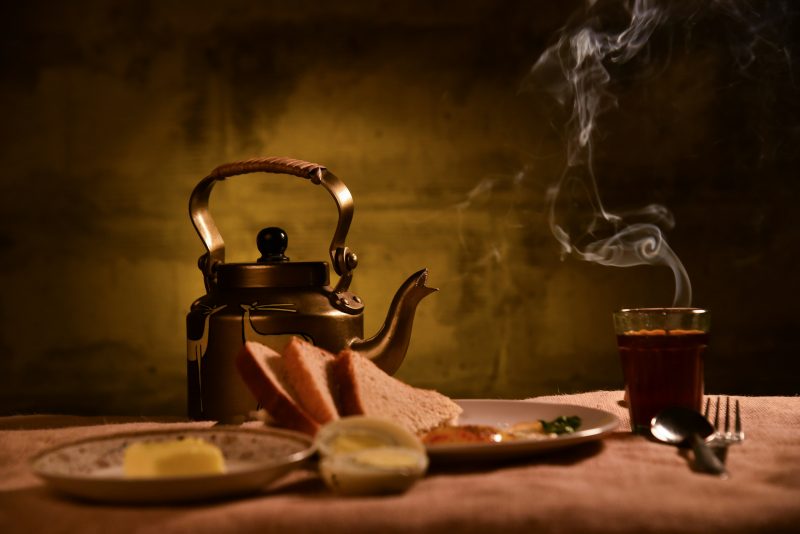
Teakettle Photo by Suraj Suryawanshi on Unsplash
“23” Photo by Portia Weiss on Unsplash
You might also enjoy this post, from the archives: Table Talk