How to begin
 (now the ears of my ears awake and
now the eyes of my eyes are opened)
—e.e. cummings
April is National Poetry Month, also known as NaPoMo.
I am startled to realize God is still working today through a poem I wrote long before I suspected its deeper message for me. (Yes, it’s a poem from my new book, Where the Sky Opens.)
Poetry is layered. Sometimes hard to fathom. I want to show you a few ways to enter a poem.
Will you give me the chance? Promise me you’ll read to the end!
Are you nodding?
Okay, here’s a little secret. Look for the conflict.
Let’s start with just a few lines:
Warning
Think twice before trusting the generous
cottonwood tree, with its quicksilver sheen,
big-hearted leaves and their wind-sourced
repertoire: page rustle to patter of rain,
applause to downpour.
Conflict drives novels, movies, the news. Even elections. Especially elections. Conflict grabs our attention. It wakes us up.
I used to fall asleep to the taffeta rustle of leaves on the volunteer cottonwood tree beyond our window. How did a tree that no one planted—or even wanted—grow so fast?
It loomed over our one piece of all-day sunshine. Goodbye, roses, tomatoes, and peppers. Hello, spring lint everywhere, followed by months of falling mulch.
We cut the messy cottonwood down. I missed its music. It felt akin to mourning a loss—another many-layered thing.
The tree in the poem, however, poses a threat.
The conflict deepens
The cottonwood has the uncanny ability to self-amputate limbs. Talk about a betrayal—to itself, and to anyone walking (or parked) beneath it.
Merriam-Webster describes an aspect of betrayal that’s been weighing on my mind:
to fail or desert especially in time of need
<betrayed her family>
There is a person I’ve frozen in time with judgments I formed, long ago. In a recent interaction I assumed the worst, thereby failing to offer compassion or warmth.
Back to the poem
(Warning . . .)
A tree so genial
to the hunting owl
will drop
without warning
a lushly upholstered limb,
smash all in its path
(Note: Due to WordPress formatting restraints, I can’t visually reproduce this part of the poem. Please imagine each line is staggered, visually fragmenting the action. Which slows down the reading and builds suspense.)
So there is conflict, betrayal, and now . . . danger.
“Smash all in its path” seems to hang suspended a moment, preceding the final lines.

At first glance, this final stanza, below, withholds itself, as if locked away, rusted shut.
Here’s a key:
Images in poetry often suggest the human story.
Ready? Let’s go back inside
(smash all in its path . . .)
in that relentless way meddlers
lob hints and insinuations, leave the crater
to slowly scar over, but not before
something with talons digs in, claiming
the tree no longer a fort, a mother, a lullaby.
Read that first line again.
in the relentless way meddlers
Look for the word or words that suggest your story. “Meddler” may be one of those words. It’s my word, too. Read on. What about scar? Or insinuations?
Assumptions dig in their talons. That’s what happened with me and my meddler. I harbored an old harm done. Reading my own poem alerted me to something amiss.
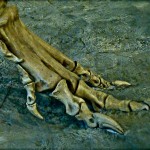
Once, my meddler and I were friends. Almost family.
And now, those insidious talons. I feel them on the back of my neck.
(now the ears of my ears awake and
now the eyes of my eyes are opened)*
Is there a poem or scripture passage that haunts you from time to time?
Do you see your story in its mirror?

Please share this post with anyone you know who might enjoy learning more about reading poems. Thank you!
Where the Sky Opens, which includes this poem, is available on Amazon. I am always wildly grateful for readers who leave a review of my book on Amazon. If you’ve done so, thank you! If you’ve thought about it, please know that even one sentence counts. Once there are 50 reviews, Amazon points out my book to potential readers (currently at 25).
*e.e. cummings, “i thank you God for most this amazing”
Laurie, the poem you chose for this post is the one I most connected with in your collection. It was cool to read your explanations here.
Carol, I’ve heard others say the same. I’m so glad it spoke to you. And that the post brought you pleasure too. Thank you!
I can’t believe a week has gone by since you posted this. I have intentions of curling up with my copy of Where the Sky Opens, the “secrets” revealed here, and my journal. Hasn’t happened yet! But I’m looking forward to sitting down with you (virtually, under that cottonwood tree!) and gleaning more insights. Thank you for this, Laurie! P.S. When I finish your collection of poems, I will write a review on Amazon!
Hi Nancy, I know what you mean about time slipping by. Thank you so much for buying the book. I hope you’ll enjoy it, be it under a “virtual” cottonwood, or elsewhere. You are such an encourager via your posts as well as your correspondence. I’m glad our spheres have intersected, and I’m grateful you’re willing to write a review in due time. Thank you!
I, too, am glad our spheres have intersected! 🙂
Wishing you good things this day, Nancy!
Laurie, thank you for laying bare the hidden bones and essence of your poetic words. It makes them sing with greater resonance and meaning. I love the way you write and how your own words have sung back to you in a new song. Always worth revisiting snippets, isn’t it? Bless you. <3
Joy, you’re welcome! I’m grateful for the deeper understanding readers seem to be experiencing.
It sounds like maybe you’ve had this experience with your poems, too. This one really arrested me last week, then made me shake my head in wonder. And then repent! 🙂
Laurie. I love how your own poem spoke to you. And Oh, I understand freezing someone in time with judgments. there is a way to keep formatting in Word PRess. I finally figured it out. I can show you sometime.
Carol, this is the first time it’s happened so dramatically, humbling and surprising and oddly satisfying, as if some “inspired” part of me was preparing the way for a belated (and much needed) revelation.
I would love your help on formatting and will message you on FB if that’s okay. Thank you!
Laurie, I had to go get my copy of “Where the Sky Opens” and read this the way it was ‘supposed’ to look.
What was interesting to me was not the conflict in this poem but the way you waltzed from describing a cottonwood tree and its limbs damage to the way our words cause scars from the ‘dropped limbs’ of our words. (or at least that’s the way I read it).
Thank you for the poetry ‘how-to’ lesson!
You’re welcome. I’m glad you looked at the original;, Jody. I had already written most of the post when I realized I couldn’t retain the second stanza’s spacing and line breaks.
Your interpretation is spot-on. Making this kind of transition in a poem (or prose) seamlessly is one of my current (and ongoing) challenges. I love it when someone’s writing arrests me on one level, then catches me off guard and ushers me into a larger room, a greater understanding.
So interesting and deep. It’s good to have a key to understanding. thanks!
Hi Sally! You are so welcome. I love your sweet spirit and openness to explore new things!
once again i’m richly rewarded
Judi, thank you for writing. I’m grateful you found something here that enriched your time spent. I’m always glad when you drop by!
Hello Laurie — thank you for helping me to look inside words today.
Bev, you are so very welcome. Thank you for reading! May potent words draw you in at all the right moments, because of the Word.